Frogs and Toads
Wood Frog
Lithobates sylvaticus
Across the regions where it's common, the Wood Frog peaks from February to April.
Shows up in 13 ecoregions and 24 states
Keep Herp Calendar free
Hi, I'm Nick. I built Herp Calendar on my own and I keep it free, with no ads. If it has helped you find a herp this season, a small tip goes straight into the hosting and the data work. Only if you can spare it. Either way, I'm glad you're here.
Frogs and Toads
Wood Frog
Lithobates sylvaticus
Description
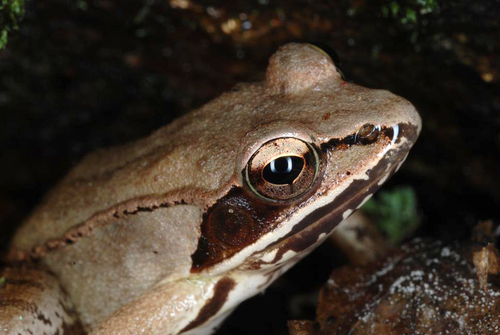
Lithobates sylvaticus or Rana sylvatica, commonly known as the wood frog, is a frog species that has a broad distribution over North America, extending from the boreal forest of the north to the southern Appalachians, with several notable disjunct populations including lowland eastern North Carolina. Wood frogs range from 51 to 70 mm (2.0 to 2.8 in) in length.Wikipedia ↗
Habitat
The contiguous wood frog range is from northern Georgia and northeastern Canada in the east to southern British Columbia and Alaska in the west. They range all throughout the boreal forests of Canada.Wikipedia ↗
When it's active
Adult wood frogs typically hibernate within 65 meters of breeding pools. They emerge from hibernation in early spring and migrate to the nearby pools.Wikipedia ↗
When and where it's active
Each row is its own calendar, counted from records in that area. Seasons shift by place.
Ecoregions
States
About the Wood Frog
When is the Wood Frog most active?
Across the regions where it's common, the Wood Frog peaks from February to April.
Where does the Wood Frog live?
It has enough records to show in 13 ecoregions and 24 states, including Alaska, Connecticut, Delaware, and Illinois.