Snakes
Northern Rubber Boa
Charina bottae
Across the regions where it's common, the Northern Rubber Boa peaks from April to September.
Shows up in 10 ecoregions and 7 states
Keep Herp Calendar free
Hi, I'm Nick. I built Herp Calendar on my own and I keep it free, with no ads. If it has helped you find a herp this season, a small tip goes straight into the hosting and the data work. Only if you can spare it. Either way, I'm glad you're here.
Snakes
Northern Rubber Boa
Charina bottae
Description
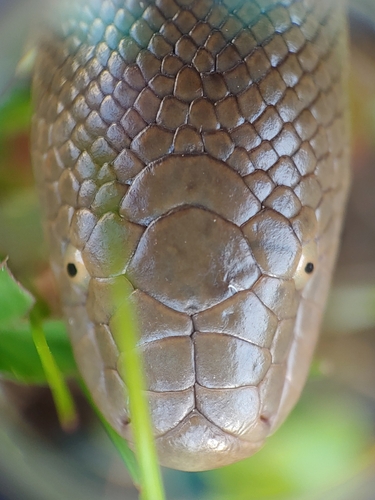
The rubber boa (Charina bottae) is a species of snake in the family Boidae and is native to western North America. Rubber boas are one of the smaller boa species, adults can be anywhere from 38 to 84 cm (1.25 to 2.76 ft) long; newborns are typically 19 to 23 cm (7.5 to 9.1 in) long.Wikipedia ↗
Habitat
Rubber boas have been known to inhabit a wide variety of habitat types from grassland, meadows and chaparral to deciduous and conifer forests, to high alpine settings. They are not as tolerant of higher temperatures as other snake species and cannot inhabit areas that are too hot and dry, but can live in areas that are surprisingly cold, especially for a snake.Wikipedia ↗
When it's active
They are primarily nocturnal and likely crepuscular (active during dawn and dusk) which partially contributes to how rarely they are encountered. Mating occurs shortly after reemergence from brumation in the spring, and young are born anywhere from August to November later that year.Wikipedia ↗
When and where it's active
Each row is its own calendar, counted from records in that area. Seasons shift by place.
Ecoregions
States
About the Northern Rubber Boa
When is the Northern Rubber Boa most active?
Across the regions where it's common, the Northern Rubber Boa peaks from April to September.
Where does the Northern Rubber Boa live?
It has enough records to show in 10 ecoregions and 7 states, including California, Idaho, Montana, and Nevada.