Lizards
Six-lined Racerunner
Aspidoscelis sexlineatus
Across the regions where it's common, the Six-lined Racerunner peaks from April to August.
Shows up in 14 ecoregions and 17 states
Keep Herp Calendar free
Hi, I'm Nick. I built Herp Calendar on my own and I keep it free, with no ads. If it has helped you find a herp this season, a small tip goes straight into the hosting and the data work. Only if you can spare it. Either way, I'm glad you're here.
Lizards
Six-lined Racerunner
Aspidoscelis sexlineatus
Description
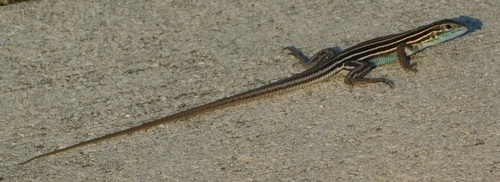
The six-lined racerunner (Aspidoscelis sexlineatus) is a species of lizard native to the United States and Mexico. The six-lined racerunner is typically dark green, brown, or black in color, with six yellow or green-yellow stripes that extend down the body from head to tail.Wikipedia ↗
Habitat
In a study conducted on A. sexlineata in Mexico, the majority of the individuals found were inhabiting areas near the seashore that were formed and influenced from maritime climate and hurricanes. The species' range also reaches north to Wisconsin and Minnesota.Wikipedia ↗
When it's active
Like other species of whiptail lizards, the six-lined racerunner is diurnal and insectivorous. A. sexlineata is most active between 9:00 and 11:30 am on clear days between late spring and early summer when the temperature is closest to 90 °F. A different study found six-lined racerunners were most active between 11:00 am and 3:00 pm.Wikipedia ↗
When and where it's active
Each row is its own calendar, counted from records in that area. Seasons shift by place.
Ecoregions
States
About the Six-lined Racerunner
When is the Six-lined Racerunner most active?
Across the regions where it's common, the Six-lined Racerunner peaks from April to August.
Where does the Six-lined Racerunner live?
It has enough records to show in 14 ecoregions and 17 states, including Alabama, Arkansas, Colorado, and Florida.