← Herp Calendar map
Frogs and Toads
African Clawed Frog
Xenopus laevis
Across the regions where it's common, the African Clawed Frog peaks from May to September.
Shows up in 1 ecoregion and 1 state
Keep Herp Calendar free
Hi, I'm Nick. I built Herp Calendar on my own and I keep it free, with no ads. If it has helped you find a herp this season, a small tip goes straight into the hosting and the data work. Only if you can spare it. Either way, I'm glad you're here.
Frogs and Toads
African Clawed Frog
Xenopus laevis
Look, don't take. Many states regulate collecting reptiles and amphibians. Photograph it, log it on iNaturalist and leave it where you found it.
Description
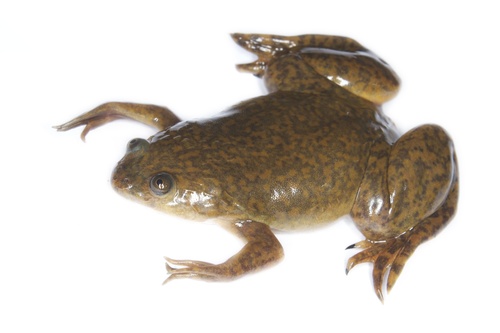
These frogs are plentiful in ponds and rivers within the south-eastern portion of Sub-Saharan Africa. They are aquatic and are often a mottled greenish-grey-brown in color, sometimes with yellowish botches, and with a pale white-cream belly.Wikipedia ↗
Habitat
Xenopus laevis occurs naturally in southern Africa. Xenopus laevis lives in warm, stagnant grassland ponds as well as in streams in arid and semi-arid regions.Animal Diversity Web ↗
When it's active
These frogs are particularly cannibalistic; the stomach contents of feral clawed frogs in California have revealed large amounts of the frog's larvae. Clawed frog larvae are filter feeders and collect nutrients from plankton, allowing adult frogs that consume the tadpoles to have access to these nutrients.Wikipedia ↗
When and where it's active
Each row is its own calendar, counted from records in that area. Seasons shift by place.
PeakShoulderQuiet
Ecoregions
JanFebMarAprMayJunJulAugSepOctNovDec
Southern California Coast introducedStates
JanFebMarAprMayJunJulAugSepOctNovDec
California introducedAbout the African Clawed Frog
When is the African Clawed Frog most active?
Across the regions where it's common, the African Clawed Frog peaks from May to September.
Where does the African Clawed Frog live?
It has enough records to show in 1 ecoregions and 1 states, including California.