Snakes
Western Massasauga
Sistrurus tergeminus
The Western Massasauga's peak months vary by region.
Shows up in 0 ecoregions and 4 states · venomous
Keep Herp Calendar free
Hi, I'm Nick. I built Herp Calendar on my own and I keep it free, with no ads. If it has helped you find a herp this season, a small tip goes straight into the hosting and the data work. Only if you can spare it. Either way, I'm glad you're here.
Snakes
Western Massasauga
Sistrurus tergeminus
Description
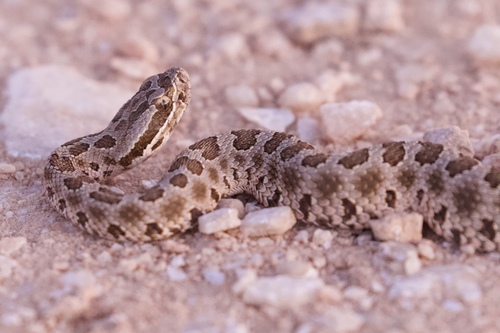
Sistrurus tergeminus, also known commonly as the western massasauga, is a species of rattlesnake native to the southwestern plains of the United States and northern Mexico. Adults of Sistrurus tergeminus range in total length (tail included) from 35 to 91 cm (14 to 36 in).Wikipedia ↗
Habitat
In the United States, Sistrurus tergeminus is found in the southwestern plains from southeastern Colorado to extreme southeastern Nebraska and northwestern Missouri, southwest through east-central Kansas and west-central Oklahoma into northern and central Texas about as far southwest as the Colorado River. It is also found in Mexico, in the states of Tamaulipas, southern Nuevo León, north-central Coahuila, and Samalayuca, Chihuahua.Wikipedia ↗
When it's active
Primarily nocturnal, the species is considered mild-mannered and sluggish especially during the summer, when the weather is too hot for it to be active and it is sometimes found basking.Wikipedia ↗
Venom
The venom of Sistrurus tergeminus is potent like that of larger species of rattlesnakes, but due to the lower yield (the amount it is capable of delivering in a single bite), its potential for harm is greatly reduced. The venom is a powerful hemotoxin which can cause swelling, necrosis, and severe pain.Wikipedia ↗
Harmless look-alikes
When and where it's active
Each row is its own calendar, counted from records in that area. Seasons shift by place.
States
About the Western Massasauga
When is the Western Massasauga most active?
The Western Massasauga's peak months vary by region.
Where does the Western Massasauga live?
It has enough records to show in 0 ecoregions and 4 states, including Kansas, New Mexico, Oklahoma, and Texas.
Is the Western Massasauga venomous?
Yes. The Western Massasauga is venomous. Don't handle it, and give it room.
What snakes get mistaken for the Western Massasauga?
Harmless lookalikes include the Gopher Snake, Pine Snake, and Eastern Hognose Snake.