← Herp Calendar map
Lizards
Blainville's Horned Lizard
Phrynosoma blainvillii
Across the regions where it's common, the Blainville's Horned Lizard peaks from April to July.
Shows up in 6 ecoregions and 1 state
Keep Herp Calendar free
Hi, I'm Nick. I built Herp Calendar on my own and I keep it free, with no ads. If it has helped you find a herp this season, a small tip goes straight into the hosting and the data work. Only if you can spare it. Either way, I'm glad you're here.
Lizards
Blainville's Horned Lizard
Phrynosoma blainvillii
Look, don't take. Many states regulate collecting reptiles and amphibians. Photograph it, log it on iNaturalist and leave it where you found it.
Description
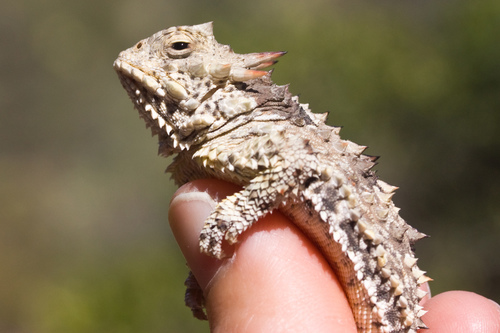
The San Diego horned lizard or Blainville's horned lizard (Phrynosoma blainvillii) is a species of phrynosomatid lizard native to southern and central California in the United States and northern Baja California in Mexico. The San Diego horned lizard or the Blainville's horned lizard (Phrynosoma blainvillii) is a flat bodied lizard with long spiky horns located on the top and side of its head and has smaller spikes throughout its body and tail.Wikipedia ↗
Habitat
This species ranges from the Central Valley of California south through Southern California to northern Baja California. Populations of Blainsville's horned lizard have been identified at elevations ranging from 10 m (33 ft) above sea level (El Segundo Dunes, Los Angeles County) to approximately 2,130 m (6,990 ft) above sea level (Tahquitz Meadow, Riverside County).Wikipedia ↗
When and where it's active
Each row is its own calendar, counted from records in that area. Seasons shift by place.
PeakShoulderQuiet
Ecoregions
JanFebMarAprMayJunJulAugSepOctNovDec
Southern California CoastCalifornia Coast Ranges and FoothillsSouthern California MountainsMojave DesertSonoran DesertSierra NevadaStates
JanFebMarAprMayJunJulAugSepOctNovDec
CaliforniaAbout the Blainville's Horned Lizard
When is the Blainville's Horned Lizard most active?
Across the regions where it's common, the Blainville's Horned Lizard peaks from April to July.
Where does the Blainville's Horned Lizard live?
It has enough records to show in 6 ecoregions and 1 states, including California.