Frogs and Toads
Common Coqui
Eleutherodactylus coqui
Across the regions where it's common, the Common Coqui peaks from February to January.
Shows up in 1 ecoregion and 1 state
Keep Herp Calendar free
Hi, I'm Nick. I built Herp Calendar on my own and I keep it free, with no ads. If it has helped you find a herp this season, a small tip goes straight into the hosting and the data work. Only if you can spare it. Either way, I'm glad you're here.
Frogs and Toads
Common Coqui
Eleutherodactylus coqui
Description
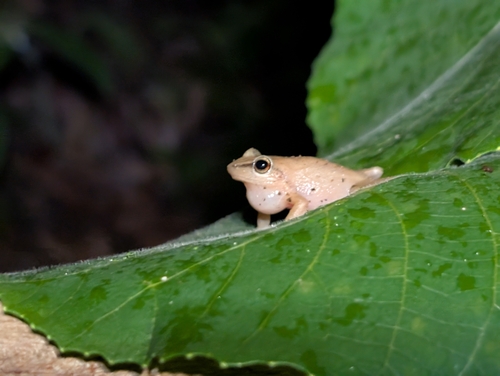
The common coquí, widely known as the coquí (Eleutherodactylus coqui), is a species of frog native to Puerto Rico belonging to the family Eleutherodactylidae. Coquís are muddy-brown in mottled coloration on the top with rust-tan flanks and a light-gray belly.Wikipedia ↗
Habitat
Common coquís are native to the islands of Puerto Rico, Vieques and Culebra, where they are widespread and abundant; the only notable exception occurs in Puerto Rican dry forests, where the species is rarer. Densities fluctuate depending on the season and habitat.Wikipedia ↗
When it's active
The size differences between sexes are a result of additional energy consumption related to breeding behavior by males. The common coquí is a generalist nocturnal predator, which can consume, as a population, 114,000 invertebrates each night per hectare.Wikipedia ↗
When and where it's active
Each row is its own calendar, counted from records in that area. Seasons shift by place.
Ecoregions
States
About the Common Coqui
When is the Common Coqui most active?
Across the regions where it's common, the Common Coqui peaks from February to January.
Where does the Common Coqui live?
It has enough records to show in 1 ecoregions and 1 states, including Hawaii.