← Herp Calendar map
Salamanders
Wandering Salamander
Aneides vagrans
Across the regions where it's common, the Wandering Salamander peaks from September to April.
Shows up in 1 ecoregion and 1 state
Keep Herp Calendar free
Hi, I'm Nick. I built Herp Calendar on my own and I keep it free, with no ads. If it has helped you find a herp this season, a small tip goes straight into the hosting and the data work. Only if you can spare it. Either way, I'm glad you're here.
Salamanders
Wandering Salamander
Aneides vagrans
Look, don't take. Many states regulate collecting reptiles and amphibians. Photograph it, log it on iNaturalist and leave it where you found it.
Description
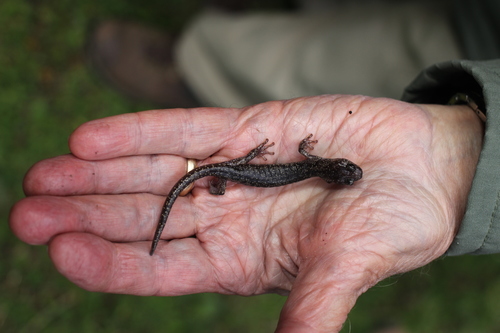
The wandering salamander (Aneides vagrans) is species of climbing salamander in the family Plethodontidae. The wandering salamander is a long, slender salamander that grows to a snout-vent length of approximately 80 millimetres (3.1 in) and a total length of 130 millimetres (5.1 in).Wikipedia ↗
Habitat
In California, the wandering salamander's range extends from northern Siskiyou and Del Norte Counties, south along the coast through northwestern Sonoma County. The species is widespread in low elevation forests across Vancouver Island and its surrounding islands.Wikipedia ↗
When it's active
Breeding takes place in spring and early summer, during which the female lays a clutch of 6-9 eggs in a concealed location. The eggs of wandering salamanders hatch directly into adult form, with no aquatic larval stage.Wikipedia ↗
When and where it's active
Each row is its own calendar, counted from records in that area. Seasons shift by place.
PeakShoulderQuiet
Ecoregions
JanFebMarAprMayJunJulAugSepOctNovDec
Pacific Northwest CoastStates
JanFebMarAprMayJunJulAugSepOctNovDec
CaliforniaAbout the Wandering Salamander
When is the Wandering Salamander most active?
Across the regions where it's common, the Wandering Salamander peaks from September to April.
Where does the Wandering Salamander live?
It has enough records to show in 1 ecoregions and 1 states, including California.